Lockouts usually happen on normal days. While you’re outside taking out the trash, the door shuts on its own because of the wind. The keys are still on the table. Sometimes keys won’t always turn when they’re in your hand because the door has moved or the lock is old. It is easy to make things worse when you are stressed by pushing too hard or trying strange things. This blog explains what to check first, when to call a locksmith, and what a locksmith can do without tearing up your door. You’ll also learn a few small fixes that lower the chance of another lockout. Keep your phone charged, stay in a safe spot, and gather details for the call.
Start With Safe Checks And Easy Options
First, make sure everyone is safe. If a child, older adult, or pet is inside and you can’t get in, call for help right away. If it’s late or the area feels unsafe, move to a well-lit spot and ask a neighbor to wait with you.
Quick checks that often solve it
- Try every door: back, side, garage, and sliding doors
- Test windows that open from the outside
- Call anyone who might have your spare key
- If you have a keypad, enter the code slowly and watch for low-battery lights.
Skip the “credit card trick.” Many doors have a deadbolt or an anti-shim latch, so plastic won’t help and can tear the weather strip. If the key is in the lock but won’t turn, don’t twist harder. Too much force can snap the key.
What A Locksmith Checks First At Home
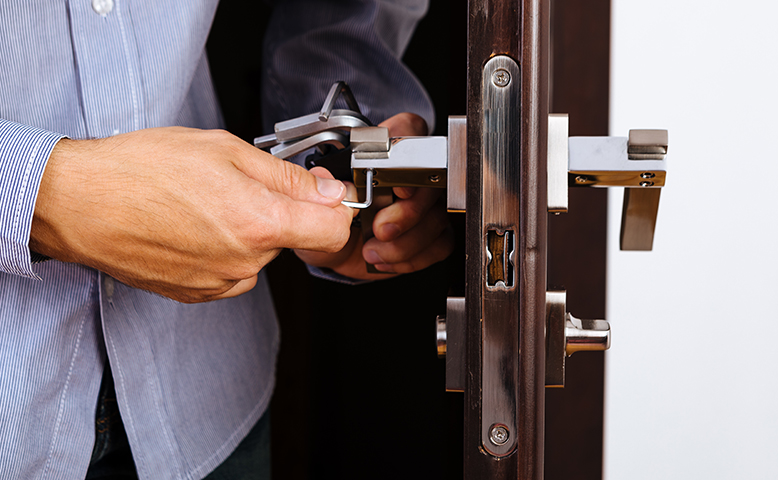
When the locksmith arrives, they may ask a few quick questions, and these details can change the plan. They look closely at the hardware. A spring latch (often on a knob) has an angled piece that can sometimes be pushed back. A deadbolt is different. It is a straight bar that slides into the frame and must be turned back through the cylinder.
What they may check on the spot
- Door gap and alignment near the strike plate
- Whether the cylinder is a common pin-tumbler style
- If a broken key tip is blocking the keyway
- For smart locks: battery level, jammed thumb-turn, or a backup power port
This short inspection helps them choose a method that avoids damage.
How Doors Are Opened Without Wrecking Them Today
Most locksmiths aim for “non-destructive entry,” meaning they try to open the door without wrecking the lock or the frame. For many homes, the lock is a pin-tumbler cylinder. Inside are small pins. The right key lifts them to the same level so the plug can rotate. If the problem is only the latch, they may use a latch tool to push it back, but only if the door design allows it.
Drilling is not the first move. It is used when the lock is seized, badly worn, or built to resist picking. If drilling is needed, it’s done in a controlled way, and the cylinder or core is replaced, so you leave with working keys.
Fix The Cause So It Won’t Repeat Next Time
Getting back inside is step one. Step two is making sure you don’t end up outside again tomorrow. Many “key won’t turn” calls come from door alignment. The bolt scrapes the strike plate when the door sags. A locksmith can make the hinges tighter, change the screws to ones that are longer, or adjust the strike plate so the bolt goes in easily.
Getting a new key is a good idea if you lost yours or think someone else might have it. When you rekey, the bits inside the cylinder are changed, so old keys will not work. The hardware stays the same, but the keys are different. This is also common after moving into a new place.
Simple habits that reduce lockouts
- Keep one spare with a trusted person nearby
- Replace worn keys before they bend
- For smart locks, change batteries on a set schedule
- Test the lock each week if it sticks
Small fixes now can save a late-night call later.
How To Choose A Locksmith You Trust Locally
In a lockout, it’s tempting to call the first number you see online. Take one minute to protect yourself. A real locksmith can usually give a clear price range after you describe the door and lock type. They should explain what could change the price, like after-hours work or a damaged lock.
Good questions to ask on the phone
- Is the service call included in the estimate?
- Will you try non-drill methods first?
- What proof do you need that I live here?
- Will I get an itemized receipt?
Red flags to watch for
- Refuses any price range, then “decides” on site
- Pushes drilling right away with no reason
- No receipt or business ID
A careful choice helps you avoid surprise costs. It also keeps you calmer. Call Artisan Locksmith for help with getting into your home, rekeying, making duplicates of keys, fixing locks, and getting help on the road. A preparation for extra keys today can stop the next difficulty at night.